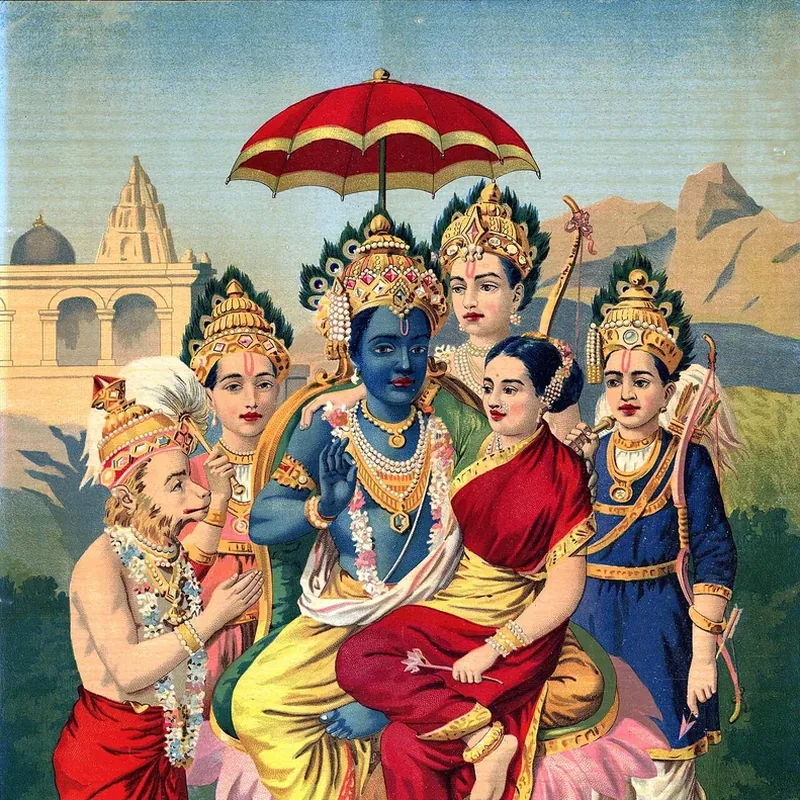
॥ શ્રી રામાય નમઃ ॥
Shri Ramaya Namah
વૈષ્ણવ જન તો તેને કહીએ
Vaishnava Jana To
By Narsinh Mehta
ગુજરાતી · 15th century · Bhajan
~1 min readRama bhakti
A 15th-century Gujarati bhajan by the saint-poet Narsinh Mehta. It defines devotion not as ritual but as compassion, humility and honesty. Mahatma Gandhi's daily prayer — sung at Sabarmati Ashram and around the world.
- Author
- Narsinh Mehta
- Language
- ગુજરાતી
- Literary form
- Bhajan
- Century
- 15th century
- Tradition
- Rama bhakti
Voice Lab
Recite in My Voice
Record yourself reciting or singing this work once. Stored only on this device, never uploaded. The player will use your recording instead of the synthetic chant whenever you tap play.
વૈષ્ણવ જન તો તેને કહીએ, જે પીડ પરાઈ જાણે રે પર દુ:ખે ઉપકાર કરે તોયે, મન અભિમાન ન આણે રે ॥૧॥
સકળ લોકમાં સહુને વંદે, નિંદા ન કરે કેની રે વાચ કાછ મન નિશ્ચલ રાખે, ધન ધન જનની તેની રે ॥૨॥
સમદૃષ્ટિ ને તૃષ્ણા ત્યાગી, પરસ્ત્રી જેને માત રે જિહ્વા થકી અસત્ય ન બોલે, પરધન નવ ઝાલે હાથ રે ॥૩॥
મોહ માયા વ્યાપે નહિ જેને, દૃઢ વૈરાગ્ય જેના મનમાં રે રામ નામ શું તાળી લાગી, સકળ તીરથ તેના તનમાં રે ॥૪॥
વણલોભી ને કપટ રહિત છે, કામ ક્રોધ નિવાર્યા રે ભણે નરસૈંયો તેનું દર્શન કરતાં, કુળ એકોતેર તાર્યા રે ॥૫॥
Meaning
A true Vaishnava (devotee) is one who feels the pain of others, helps those who are in misery, yet harbours no pride. They respect everyone, speak ill of none, and keep their words, deeds, and thoughts pure — blessed is the mother who bore them.
Devotional companion
About
A 15th-century Gujarati bhajan by the saint-poet Narsinh Mehta. It defines devotion not as ritual but as compassion, humility and honesty. Mahatma Gandhi's daily prayer — sung at Sabarmati Ashram and around the world.
Meaning
Gujarat's beloved definition of a true devotee: one who feels another's pain as their own.
In depth
A true Vaishnava (devotee) is one who feels the pain of others, helps those who are in misery, yet harbours no pride. They respect everyone, speak ill of none, and keep their words, deeds, and thoughts pure — blessed is the mother who bore them.
History & context
Composed by the 15th-century Gujarati saint-poet Narsinh Mehta. Mahatma Gandhi adopted it as one of his favourite bhajans; it was sung daily at his Sabarmati Ashram.
Why people recite it
Sung at prayer meetings, civic gatherings and Gandhi memorials as a hymn of universal ethics — a reminder that real religion shows up as kindness to other people.
Life lessons
- Goodness is measured by how you treat those who can do nothing for you. Feel another's pain, help without pride, speak ill of no one — and let that be your faith.
Key themes
Narsinh MehtaGandhiDevotionCompassionRamaName ChantingBhajan
About the author
Narsinh Mehta
- Era
- c. 1414–1481 CE (traditional)
- Region
- Gujarat (Junagadh)
- Tradition
- Krishna bhakti
Narsinh Mehta is the adi kavi — the first poet — of Gujarati literature and the most beloved saint-poet of Gujarat. A devotee of Krishna, he composed prabhatiyas (dawn hymns) and bhajans whose tenderness and moral clarity have shaped Gujarati devotional life for centuries.
His best-known song, Vaishnava Jana To, defines a true devotee as one who feels the suffering of others as their own. Mahatma Gandhi made it part of his daily prayers, and through him it became known across the world as a hymn of compassion and humility.
Many episodes of his life survive as cherished devotional tradition rather than documented record; his dates, too, are the traditional account.
Notable works
Vaishnava Jana ToPrabhatiyaSudama CharitGovind Gaman
Dates and many life episodes are devotional tradition, not documented history.
You may also like
Bhajanગુજરાતી
Jagi Ne Joun To
Narsinh Mehta · 15th century
Narsinh Mehta's dawn vision — 'When I wake and look, the whole world is Krishna.'
Read & recite →
Stotraसंस्कृत
Bhaja Govindam (Moha Mudgara)
Adi Shankaracharya · 8th century
Adi Shankara's stirring call to seek God over worldly attachment.
Read & recite →
Bhajanहिन्दी
Payoji Maine Ram Ratan Dhan Payo
Mirabai · 16th century
Mirabai's song of finding the priceless jewel of the Divine Name — a wealth no one can steal.
Read & recite →
Bhajanગુજરાતી
અખિલ બ્રહ્માંડમાં એક તું શ્રીહરિ
Traditional
A bhajan attributed to Traditional.
Read & recite →
Bhajanગુજરાતી
વૈષ્ણવ જન તો તેને રે કહીયે
Traditional
A bhajan attributed to Traditional.
Read & recite →
Bhajanગુજરાતી
નારાયણનું નામ જ લેતાં
Traditional
A bhajan attributed to Traditional.
Read & recite →
Source & trust
Public domain
- Attribution
- Narsinh Mehta
- Language
- ગુજરાતી · 15th century
- Source
- Public domain — traditional composition (pre-1500 CE).
Devotional commentary and life lessons are editorial reflections. Historical details are limited to well-documented facts; devotional belief is labelled as tradition, never presented as proven history.