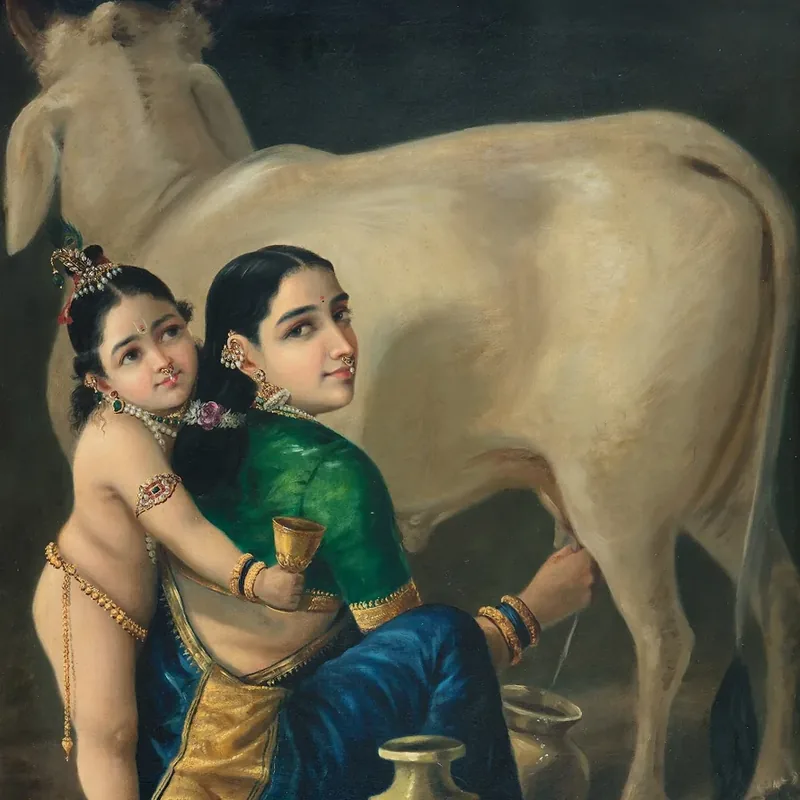
Krishna16th century
पायो जी मैंने राम रतन धन पायो
Payoji Maine Ram Ratan Dhan Payo
By Mirabai · हिन्दी
॥ શ્રી કૃષ્ણાય નમઃ ॥
Shri Krishnaya Namah
पायो जी मैंने राम रतन धन पायो
Payoji Maine Ram Ratan Dhan Payo
By Mirabai
हिन्दी · 16th century · Bhajan
~1 min readKrishna bhakti
A bhajan by the 16th-century princess-saint Mirabai. She declares she has found the one treasure beyond price — the Name of God. A joy that, unlike worldly riches, cannot be spent, stolen or lost.
- Author
- Mirabai
- Language
- हिन्दी
- Literary form
- Bhajan
- Century
- 16th century
- Tradition
- Krishna bhakti
Voice Lab
Recite in My Voice
Record yourself reciting or singing this work once. Stored only on this device, never uploaded. The player will use your recording instead of the synthetic chant whenever you tap play.
पायो जी मैंने राम रतन धन पायो। वस्तु अमोलक दी मेरे सतगुरु, किरपा कर अपनायो ॥
जनम जनम की पूँजी पाई, जग में सभी खुवायो। खरचै नहिं कोई चोर न लूटे, दिन-दिन बढ़त सवायो ॥
सत की नाव खेवटिया सतगुरु, भवसागर तर आयो। मीरा के प्रभु गिरिधर नागर, हरख-हरख जस गायो ॥
Meaning
I have found the priceless jewel — the wealth that is Ram. My true guru, in grace, granted me this treasure. It is the wealth of countless lifetimes, while the world has lost all. Spending does not exhaust it, thieves cannot steal it; day by day it only multiplies.
Devotional companion
About
A bhajan by the 16th-century princess-saint Mirabai. She declares she has found the one treasure beyond price — the Name of God. A joy that, unlike worldly riches, cannot be spent, stolen or lost.
Meaning
Mirabai's song of finding the priceless jewel of the Divine Name — a wealth no one can steal.
In depth
I have found the priceless jewel — the wealth that is Ram. My true guru, in grace, granted me this treasure. It is the wealth of countless lifetimes, while the world has lost all. Spending does not exhaust it, thieves cannot steal it; day by day it only multiplies.
History & context
Mirabai (c. 1498–1547), Rajput princess and saint-poet, devoted her life to Krishna. One of her most loved bhajans.
Why people recite it
Sung in bhajan gatherings and Krishna temples as an expression of the joy of devotion — and of choosing inner riches over outer status.
Life lessons
- The things most worth having can be neither bought nor taken away. Find one such treasure within, and no loss outside can leave you poor.
Key themes
MirabaiRam RatanDevotionKrishnaSurrenderName ChantingGuruBhajan
About the author
Mirabai
मीराबाई
- Era
- c. 1498–1547 CE (traditional)
- Region
- Rajasthan (Mewar)
- Tradition
- Krishna bhakti
Mirabai was a Rajput princess turned wandering devotee, remembered as one of the most fearless voices of the bhakti movement. She gave herself wholly to Krishna — whom she called Giridhar Nagar, the lifter of Mount Govardhan — and sang of him as her only lord and beloved.
Her padas, composed in Rajasthani and Braj, speak of a love that sets aside rank, custom and fear of the world. For generations of singers, especially women, her voice has stood for the freedom to choose devotion over convention.
Much of her life survives as devotional tradition; her dates and several famous episodes are the traditional account rather than firmly documented fact.
Notable works
Payoji Maine Ram Ratan Dhan PayoMere To Giridhar GopalPag Ghunghru Bandh
Dates and several celebrated episodes are devotional tradition, not documented history.
You may also like
Bhajanहिन्दी
Mero Pyaro Aayo (Meera bhajan)
Mirabai · 16th century
Mirabai rejoices in the imperishable wealth of Krishna's name.
Read & recite →
Bhajanગુજરાતી
Vaishnava Jana To
Narsinh Mehta · 15th century
Gujarat's beloved definition of a true devotee: one who feels another's pain as their own.
Read & recite →
Mantraसंस्कृत
Hare Krishna Maha Mantra
Kali-Santarana Upanishad · Ancient
The sixteen-name great mantra of Krishna and Rama.
Read & recite →
Stutiसंस्कृत
Achyutam Keshavam
Traditional · Traditional
I worship the Infallible One, Keshava, Rama, Narayana; Krishna the bound-bellied, Vasudeva, Hari; bearer of Lakshmi (Shridhara), Madhava, beloved of…
Read & recite →
Ashtakamसंस्कृत
Madhurashtakam
Vallabhacharya · 15th century
Eight verses on the sweetness of Krishna — where every line ends in 'madhuram', sweet.
Read & recite →
Bhajanहिन्दी
Shri Krishna Govind Hare Murari
Traditional · Traditional
Glory to Shri Krishna, Govind, Hari, Murari — slayer of Mura.
Read & recite →
Source & trust
Public domain
- Attribution
- Mirabai
- Language
- हिन्दी · 16th century
- Source
- Public domain — Mirabai, 16th century.
- References
Devotional commentary and life lessons are editorial reflections. Historical details are limited to well-documented facts; devotional belief is labelled as tradition, never presented as proven history.