
॥ શ્રી હનુમતે નમઃ ॥
Shri Hanumate Namah
हनुमान चालीसा
Hanuman Chalisa
Composed by Tulsidas
हिन्दी · 16th century · Chalisa
40 Chaupais~4 min readRama bhakti
One of the most widely recited devotional works in the world.
Forty chaupai verses composed by Goswami Tulsidas in Awadhi Hindi. Each verse praises Hanuman's power, wisdom and selfless service to Rama. India's most-recited prayer — sung at dawn, at dusk, and in moments of fear.
- Author
- Tulsidas
- Language
- हिन्दी
- Literary form
- Chalisa
- Century
- 16th century
- Tradition
- Rama bhakti
Voice Lab
Recite in My Voice
Record yourself reciting or singing this work once. Stored only on this device, never uploaded. The player will use your recording instead of the synthetic chant whenever you tap play.
॥ दोहा ॥ श्रीगुरु चरन सरोज रज, निज मन मुकुर सुधारि। बरनउँ रघुबर बिमल जसु, जो दायकु फल चारि॥
बुद्धिहीन तनु जानिके, सुमिरौं पवन-कुमार। बल बुधि बिद्या देहु मोहिं, हरहु कलेस बिकार॥
॥ चौपाई ॥ जय हनुमान ज्ञान गुन सागर। जय कपीस तिहुँ लोक उजागर॥ १॥ राम दूत अतुलित बल धामा। अंजनि-पुत्र पवनसुत नामा॥ २॥ महाबीर बिक्रम बजरंगी। कुमति निवार सुमति के संगी॥ ३॥ कंचन बरन बिराज सुबेसा। कानन कुण्डल कुंचित केसा॥ ४॥ हाथ बज्र औ ध्वजा बिराजै। काँधे मूँज जनेऊ साजै॥ ५॥ शंकर सुवन केसरीनन्दन। तेज प्रताप महा जग वन्दन॥ ६॥ विद्यावान गुनी अति चातुर। राम काज करिबे को आतुर॥ ७॥ प्रभु चरित्र सुनिबे को रसिया। राम लखन सीता मन बसिया॥ ८॥ सूक्ष्म रूप धरि सियहिं दिखावा। बिकट रूप धरि लंक जरावा॥ ९॥ भीम रूप धरि असुर सँहारे। रामचन्द्र के काज सँवारे॥ १०॥ लाय सजीवन लखन जियाये। श्रीरघुबीर हरषि उर लाये॥ ११॥ रघुपति कीन्ही बहुत बड़ाई। तुम मम प्रिय भरतहि सम भाई॥ १२॥ सहस बदन तुम्हरो जस गावैं। अस कहि श्रीपति कण्ठ लगावैं॥ १३॥ सनकादिक ब्रह्मादि मुनीसा। नारद सारद सहित अहीसा॥ १४॥ जम कुबेर दिक्पाल जहाँ ते। कबि कोबिद कहि सकें कहाँ ते॥ १५॥ तुम उपकार सुग्रीवहिं कीन्हा। राम मिलाय राज पद दीन्हा॥ १६॥ तुम्हरो मन्त्र बिभीषन माना। लंकेश्वर भए सब जग जाना॥ १७॥ जुग सहस्र जोजन पर भानू। लील्यो ताहि मधुर फल जानू॥ १८॥ प्रभु मुद्रिका मेलि मुख माहीं। जलधि लाँघि गये अचरज नाहीं॥ १९॥ दुर्गम काज जगत के जेते। सुगम अनुग्रह तुम्हरे तेते॥ २०॥ राम दुआरे तुम रखवारे। होत न आज्ञा बिनु पैसारे॥ २१॥ सब सुख लहै तुम्हारी सरना। तुम रक्षक काहू को डरना॥ २२॥ आपन तेज सम्हारो आपै। तीनों लोक हाँक तें काँपै॥ २३॥ भूत पिशाच निकट नहिं आवै। महाबीर जब नाम सुनावै॥ २४॥ नासै रोग हरै सब पीरा। जपत निरन्तर हनुमत बीरा॥ २५॥ संकट तें हनुमान छुड़ावै। मन क्रम बचन ध्यान जो लावै॥ २६॥ सब पर राम तपस्वी राजा। तिन के काज सकल तुम साजा॥ २७॥ और मनोरथ जो कोई लावै। सोहि अमित जीवन फल पावै॥ २८॥ चारों जुग परताप तुम्हारा। है परसिद्ध जगत उजियारा॥ २९॥ साधु सन्त के तुम रखवारे। असुर निकंदन राम दुलारे॥ ३०॥ अष्ट सिद्धि नौ निधि के दाता। अस बर दीन्ह जानकी माता॥ ३१॥ राम रसायन तुम्हरे पासा। सदा रहो रघुपति के दासा॥ ३२॥ तुम्हरे भजन राम को पावै। जनम जनम के दुख बिसरावै॥ ३३॥ अन्तकाल रघुबर पुर जाई। जहाँ जन्म हरि-भक्त कहाई॥ ३४॥ और देवता चित्त न धरई। हनुमत सेइ सर्व सुख करई॥ ३५॥ संकट कटै मिटै सब पीरा। जो सुमिरै हनुमत बलबीरा॥ ३६॥ जय जय जय हनुमान गोसाईं। कृपा करहु गुरुदेव की नाईं॥ ३७॥ जो सत बार पाठ कर कोई। छूटहि बन्दि महा सुख होई॥ ३८॥ जो यह पढ़ै हनुमान चालीसा। होय सिद्धि साखी गौरीसा॥ ३९॥ तुलसीदास सदा हरि चेरा। कीजै नाथ हृदय मँह डेरा॥ ४०॥
॥ दोहा ॥ पवनतनय संकट हरन, मंगल मूरति रूप। राम लखन सीता सहित, हृदय बसहु सुर भूप॥
Meaning
Opening verses of the Hanuman Chalisa — a 40-verse hymn by Goswami Tulsidas praising Hanuman, the embodiment of strength, wisdom, devotion, and selfless service.
Verse by verse
Meaning, explanation and a life lesson for every verse
Devotional companion
About
The Hanuman Chalisa is a forty-verse devotional hymn (chālīsā) in praise of Hanuman, the mighty vanara of the Ramayana, revered as the perfect devotee of Rama. Its name comes from chālīs, the Hindi word for forty — the number of chaupai couplets at its heart, framed by opening and closing dohas.
It is dedicated to Hanuman as the embodiment of strength placed wholly in the service of devotion: a being of immense power who seeks nothing for himself. Through him the hymn ultimately points the devotee toward Rama.
Composed in plain Awadhi rather than scholarly Sanskrit, it was written to be sung by anyone, anywhere — and it became exactly that. It is recited in homes and temples at dawn and dusk, on Tuesdays and Saturdays, before journeys and examinations, and in any moment that calls for courage.
Its literary form is the chaupai, a four-beat rhyming couplet that is easy to memorise and to chant aloud — one reason the work has lived on the lips of devotees for centuries.
Meaning
A 40-verse hymn to Hanuman — courage, strength and unwavering devotion, recited daily across India.
In depth
The opening dohas ask the guru's grace and Hanuman's blessing of strength, intelligence and knowledge, and the removal of afflictions. The chaupais then unfold Hanuman's qualities verse by verse — ocean of wisdom and virtue, son of the wind, courageous, golden-hued, companion of the wise — recalling his great deeds in Rama's service. The closing verses promise that sincere, regular recitation steadies the mind and dispels fear. Read as a whole, the Chalisa is less a list of powers than a portrait of devotion in action.
What devotees traditionally believe
Devotees traditionally hold that sincere recitation of the Hanuman Chalisa removes obstacles, wards off fear and negativity, and brings Hanuman's protective presence — and that Hanuman, blessed by Sita, grants the eight siddhis and nine nidhis named in its verses.
A traditional devotional belief — not a documented historical fact.
History & context
Composed by Goswami Tulsidas (1532–1623) in Awadhi. One of the most recited devotional texts in India.
Why people recite it
Devotees recite the Hanuman Chalisa for courage in the face of fear, for strength in hardship, and as a daily discipline — especially on Tuesdays and Saturdays. Families teach it to children as a first prayer; travellers and students keep it close before anything daunting.
Traditional significance
The Hanuman Chalisa is traditionally recited on Tuesdays and Saturdays, the days especially associated with Hanuman. Many devotees read it at dawn and at dusk, before journeys and examinations, and during Hanuman Jayanti. These are customs of devotion, not rules — the heart of the practice is sincerity, not timing.
Literary significance
The Hanuman Chalisa is written in the chaupai metre — a four-line rhyming verse — framed by an opening pair of dohas and a closing doha. Tulsidas composed it in Awadhi, the spoken language of the Gangetic plain, rather than in Sanskrit. That choice placed it within the same vernacular bhakti movement as his Ramcharitmanas, and is a large part of why it could be learned by heart and sung by people who had never studied a sacred language. Its compact, regular metre is built for chanting aloud and for memory.
Spiritual significance
Within devotion, the Chalisa is read as a path of refuge through Hanuman to Rama. Hanuman is honoured as the ideal devotee — strong, learned and fearless, yet wanting nothing for himself — so to dwell on his qualities is, in the bhakti view, to be drawn toward the same humility and surrender. Many devotees describe reciting it as a way to steady a frightened or restless mind. These are framed as the fruits of devotion and attention, not as guaranteed outcomes.
Influence on culture
Few devotional texts are as woven into everyday life across the Hindi-speaking world. The Hanuman Chalisa is sung at temples and in homes, printed in inexpensive pocket booklets, set to countless musical recordings, and learned by children as a first prayer. Its lines are heard before journeys, examinations and difficult moments. Its reach across regions, generations and recordings is itself a measure of how deeply Tulsidas's vernacular verse entered the common culture.
Interesting facts
- The name comes from chālīs, 'forty' — the forty chaupai verses at its heart.
- It is composed in Awadhi, not Sanskrit, which is why it spread so widely.
- It is traditionally attributed to Goswami Tulsidas, the poet of the Ramcharitmanas.
- It is framed by opening dohas and a closing doha around the forty verses.
- It is traditionally recited especially on Tuesdays and Saturdays.
- Its verses name the eight siddhis and nine nidhis said to be in Hanuman's gift.
Life lessons
- True strength is measured by what it serves, not by what it can destroy.
- Humility and courage are partners, not opposites — Hanuman holds both.
- Devotion turns ordinary effort into something tireless.
- Remembering a higher purpose steadies the mind in moments of fear.
- Service asks for nothing in return, and is richer for it.
- A simple daily practice, kept faithfully, becomes a source of strength.
Key themes
StrengthDevotionCourageServiceProtectionHanumanRamaFaith
Related scriptures
RamayanaRamcharitmanasSundarkandBajrang Baan
Related saints
Goswami Tulsidas
About the author
Goswami Tulsidas
गोस्वामी तुलसीदास
- Era
- c. 1497–1623 CE (traditional)
- Region
- Awadh and Kashi (Varanasi)
- Tradition
- Rama bhakti
Goswami Tulsidas was a North Indian poet-saint who wrote in Awadhi and Braj, and is revered above all as the author of the Ramcharitmanas — a retelling of the Ramayana in the language of the common people. By placing the story of Rama in the vernacular rather than Sanskrit, he made the epic singable in homes, fields and temple courtyards across the Hindi-speaking world.
Tradition holds that he was a devotee of Hanuman, and several short works of praise to Hanuman are attributed to his tradition. His poetry binds together intense personal devotion (bhakti), ethical conduct, and the ideal of Rama-rajya — a just and compassionate order. To this day his verses are recited at dawn, during Ramnavami, and in the daily worship of millions.
Precise dates and biographical details are debated by scholars; the year 1497 and a long life reaching 1623 are the traditional account rather than firmly documented fact.
Notable works
RamcharitmanasVinaya PatrikaKavitavaliDohavali
Dates and several biographical episodes are traditional accounts, not firmly documented history.
You may also like
Stotraहिन्दी
Hanuman Bahuk (Opening)
Goswami Tulsidas · 16th century
Tulsidas's heartfelt plea to Hanuman for relief from suffering of body and mind.
Read & recite →

Ashtakamहिन्दी
Sankat Mochan Hanumanashtak
Tulsidas · 16th century
Tulsidas's plea to Hanuman, the remover of all troubles.
Read & recite →
Shlokaसंस्कृत
Manojavam Marutatulyavegam
Valmiki Ramayana tradition · Ancient
The classic dhyana shloka invoking Hanuman, Rama's messenger.
Read & recite →
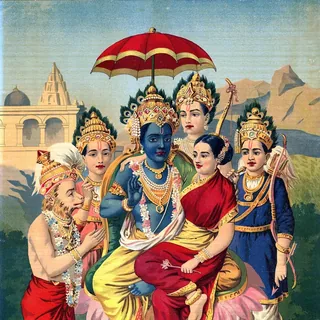
Stotraसंस्कृत
Ram Raksha Stotra — Opening
Budha-Kausika Rishi · Ancient
A 'shield of Rama' — a protective Sanskrit hymn invoking Rama's guard over every part of the body.
Read & recite →
Chalisaहिन्दी
Hanuman Chalisa — Complete
Tulsidas · 16th century
The complete 40-verse hymn (chalisa) by Goswami Tulsidas.
Read & recite →
Stotraहिन्दी
Bajrang Baan — Opening
Tulsidas (attributed) · 16th century
The 'arrow of Hanuman' — a fierce, fast-acting plea for protection and the swift end of distress.
Read & recite →
Source & trust
Public domain
- Attribution
- Composed by Tulsidas
- Language
- हिन्दी · 16th century
- Source
- Public domain — Tulsidas, 16th century.
Devotional commentary and life lessons are editorial reflections. Historical details are limited to well-documented facts; devotional belief is labelled as tradition, never presented as proven history.