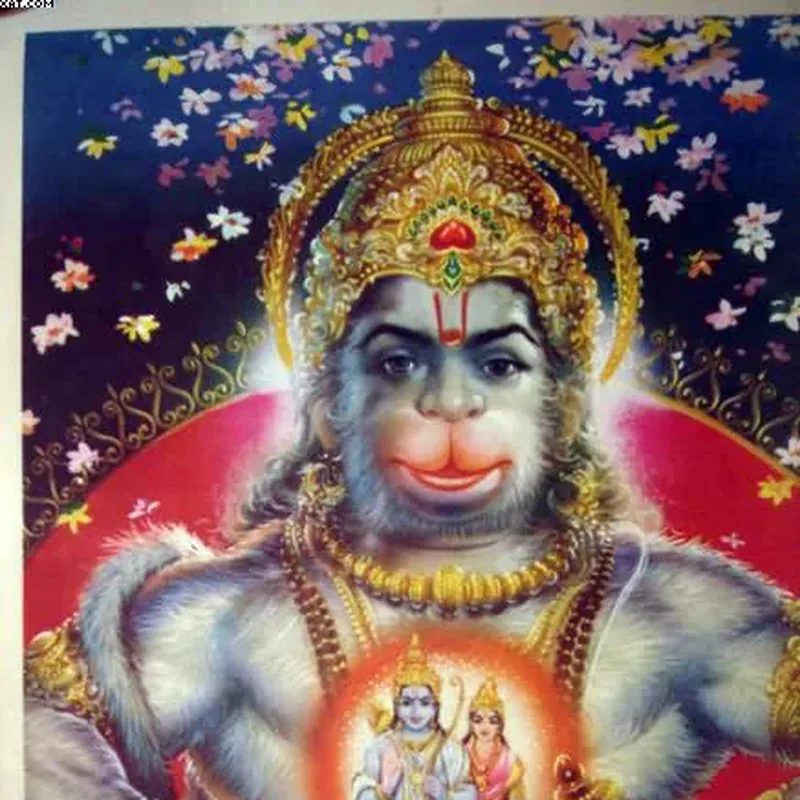
॥ શ્રી હનુમતે નમઃ ॥
Shri Hanumate Namah
संकटमोचन हनुमानाष्टक
Sankat Mochan Hanumanashtak
By Tulsidas
हिन्दी · 16th century · Ashtakam
~1 min readRama bhakti
An ashtakam (eight-verse hymn) to Hanuman as Sankat Mochan — 'remover of crises'. Each verse recalls a moment Hanuman rescued the devoted from danger. A staple of Tuesday and Saturday worship across north India.
- Author
- Tulsidas
- Language
- हिन्दी
- Literary form
- Ashtakam
- Century
- 16th century
- Tradition
- Rama bhakti
Voice Lab
Recite in My Voice
Record yourself reciting or singing this work once. Stored only on this device, never uploaded. The player will use your recording instead of the synthetic chant whenever you tap play.
बाल समय रवि भक्षि लियो तब, तीनहुँ लोक भयो अँधियारो। ताहि सों त्रास भयो जग को, यह संकट काहु सों जात न टारो॥ देवन आनि करी बिनती तब, छाँड़ि दियो रवि कष्ट निवारो। को नहिं जानत है जग में कपि, संकटमोचन नाम तिहारो॥
॥ दोहा ॥ लाल देह लाली लसे, अरु धरि लाल लँगूर। बज्र देह दानव दलन, जय जय जय कपि सूर॥
Meaning
Tulsidas's eight-verse hymn to Hanuman, the remover of troubles. In childhood you swallowed the sun and the three worlds went dark; the gods prayed and you released it. Who in this world does not know your name, O Sankat Mochan? (Opening verse and closing doha.)
Devotional companion
About
The Sankat Mochan Hanuman Ashtak is an eight-verse hymn (ashtakam) addressed to Hanuman as Sankat Mochan — 'the remover of crises'. Each verse recalls a moment from tradition in which Hanuman came to the aid of the devoted in danger.
It is dedicated to Hanuman in his most consoling aspect: the protector one turns to when difficulty closes in. Composed in Awadhi within the Tulsidas devotional tradition, it has been sung for centuries at the Sankat Mochan temple in Varanasi and in homes across the Hindi belt.
Its form is the eight-verse ashtakam, short enough to recite in full during worship — especially on Tuesdays and Saturdays — yet complete enough to feel like a steady hand in a hard hour.
Meaning
Tulsidas's plea to Hanuman, the remover of all troubles.
In depth
Tulsidas's eight-verse hymn to Hanuman, the remover of troubles. In childhood you swallowed the sun and the three worlds went dark; the gods prayed and you released it. Who in this world does not know your name, O Sankat Mochan? (Opening verse and closing doha.)
History & context
Part of the popular Hanuman devotional repertoire in the Tulsidas tradition, sung for centuries at the Sankat Mochan temple in Varanasi and in homes across the Hindi belt.
Why people recite it
Recited in times of crisis — illness, legal trouble, fear, obstacles — as an appeal to the deity tradition names specifically as the one who clears difficulties.
Life lessons
- Naming a fear is the first step to loosening its grip.
- Facing trouble squarely is braver than pretending it away.
- In the hardest hour, it helps to lean on something steadier than yourself.
- Crises pass; the practice of turning toward courage remains.
Key themes
ProtectionCourageFaithHanumanReliefSurrender
About the author
Goswami Tulsidas
गोस्वामी तुलसीदास
- Era
- c. 1497–1623 CE (traditional)
- Region
- Awadh and Kashi (Varanasi)
- Tradition
- Rama bhakti
Goswami Tulsidas was a North Indian poet-saint who wrote in Awadhi and Braj, and is revered above all as the author of the Ramcharitmanas — a retelling of the Ramayana in the language of the common people. By placing the story of Rama in the vernacular rather than Sanskrit, he made the epic singable in homes, fields and temple courtyards across the Hindi-speaking world.
Tradition holds that he was a devotee of Hanuman, and several short works of praise to Hanuman are attributed to his tradition. His poetry binds together intense personal devotion (bhakti), ethical conduct, and the ideal of Rama-rajya — a just and compassionate order. To this day his verses are recited at dawn, during Ramnavami, and in the daily worship of millions.
Precise dates and biographical details are debated by scholars; the year 1497 and a long life reaching 1623 are the traditional account rather than firmly documented fact.
Notable works
RamcharitmanasVinaya PatrikaKavitavaliDohavali
Dates and several biographical episodes are traditional accounts, not firmly documented history.
You may also like
Chalisaहिन्दी
Hanuman Chalisa
Tulsidas · 16th century
A 40-verse hymn to Hanuman — courage, strength and unwavering devotion, recited daily across India.
Read & recite →
Stotraहिन्दी
Hanuman Bahuk (Opening)
Goswami Tulsidas · 16th century
Tulsidas's heartfelt plea to Hanuman for relief from suffering of body and mind.
Read & recite →
Shlokaसंस्कृत
Manojavam Marutatulyavegam
Valmiki Ramayana tradition · Ancient
The classic dhyana shloka invoking Hanuman, Rama's messenger.
Read & recite →
Chalisaहिन्दी
Hanuman Chalisa — Complete
Tulsidas · 16th century
The complete 40-verse hymn (chalisa) by Goswami Tulsidas.
Read & recite →
Stotraहिन्दी
Bajrang Baan — Opening
Tulsidas (attributed) · 16th century
The 'arrow of Hanuman' — a fierce, fast-acting plea for protection and the swift end of distress.
Read & recite →
Source & trust
Public domain
- Attribution
- Tulsidas
- Language
- हिन्दी · 16th century
- Source
- Public domain — Goswami Tulsidas, 16th c.
- Text edition
- Public domain — Tulsidas (Sankat Mochan Hanumanashtak).
- References
Devotional commentary and life lessons are editorial reflections. Historical details are limited to well-documented facts; devotional belief is labelled as tradition, never presented as proven history.