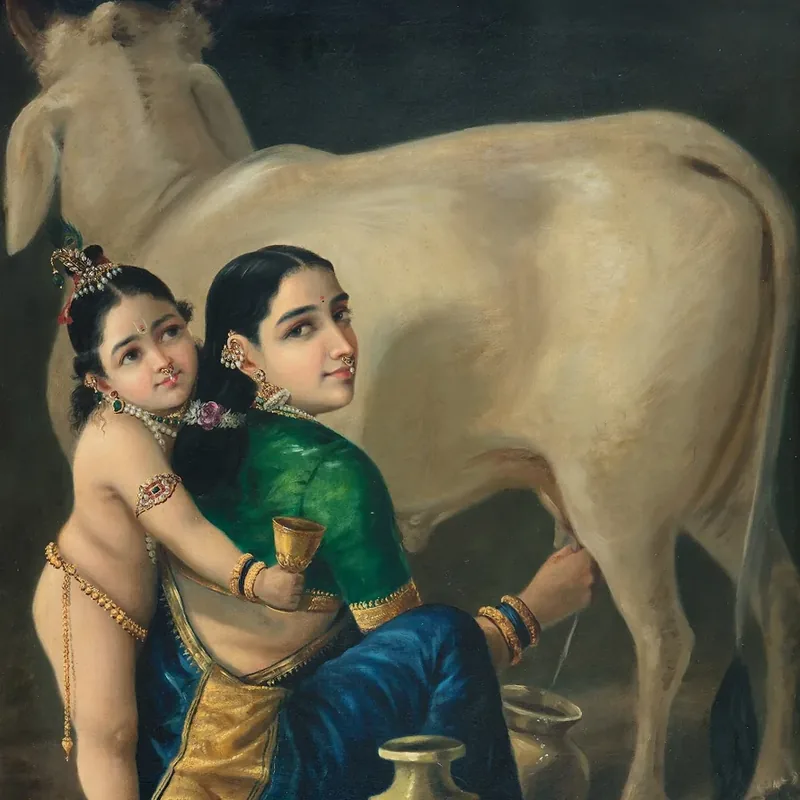
Krishna16th century
दर्शन दो घनश्याम
Darshan Do Ghanshyam
By Surdas (traditionally attributed) · हिन्दी
॥ શ્રી કૃષ્ણાય નમઃ ॥
Shri Krishnaya Namah
दर्शन दो घनश्याम
Darshan Do Ghanshyam
हिन्दी · 16th century · Bhajan
~1 min readKrishna bhakti
A blind poet's yearning plea for a vision of Krishna.
- Author
- Surdas (traditionally attributed)
- Language
- हिन्दी
- Literary form
- Bhajan
- Century
- 16th century
- Tradition
- Krishna bhakti
Voice Lab
Recite in My Voice
Record yourself reciting or singing this work once. Stored only on this device, never uploaded. The player will use your recording instead of the synthetic chant whenever you tap play.
दर्शन दो घनश्याम नाथ मोरी अँखियाँ प्यासी रे। मन मन्दिर की ज्योति जगा दो, घट घट वासी रे॥
मन्दिर मन्दिर मूरत तेरी, फिर भी न दीखे सूरत तेरी। युग बीते मोहे आस लगाए, मैं हूँ चरण की दासी रे॥
Meaning
Grant me your sight, O dark-hued Lord — my eyes thirst for you. Kindle the lamp in the temple of my heart, O dweller in every being. Your image stands in temple after temple, yet your true face I cannot see. Ages have passed as I wait in hope — I am but a servant at your feet.
Devotional companion
About
A blind poet's yearning plea for a vision of Krishna.
Meaning
A blind poet's yearning plea for a vision of Krishna.
In depth
Grant me your sight, O dark-hued Lord — my eyes thirst for you. Kindle the lamp in the temple of my heart, O dweller in every being. Your image stands in temple after temple, yet your true face I cannot see. Ages have passed as I wait in hope — I am but a servant at your feet.
Key themes
SurdasKrishnaGhanshyamDarshanDevotionSurrenderAarti LampBhajan
You may also like
Stutiसंस्कृत
Achyutam Keshavam
Traditional · Traditional
I worship the Infallible One, Keshava, Rama, Narayana; Krishna the bound-bellied, Vasudeva, Hari; bearer of Lakshmi (Shridhara), Madhava, beloved of…
Read & recite →
Ashtakamसंस्कृत
Madhurashtakam
Vallabhacharya · 15th century
Eight verses on the sweetness of Krishna — where every line ends in 'madhuram', sweet.
Read & recite →
Bhajanहिन्दी
Shri Krishna Govind Hare Murari
Traditional · Traditional
Glory to Shri Krishna, Govind, Hari, Murari — slayer of Mura.
Read & recite →
Bhajanहिन्दी
Payoji Maine Ram Ratan Dhan Payo
Mirabai · 16th century
Mirabai's song of finding the priceless jewel of the Divine Name — a wealth no one can steal.
Read & recite →
Shlokaसंस्कृत
Bhagavad Gita 2.47
Vyasa (Bhagavad Gita) · Ancient
You have the right to action alone, never to its fruits.
Read & recite →
Shlokaसंस्कृत
Bhagavad Gita 4.7–8
Vyasa (Bhagavad Gita) · Ancient
Whenever there is decline of dharma, O Bharata, and rise of adharma, then I manifest myself.
Read & recite →
Source & trust
Public domain
- Attribution
- Traditional — author not definitively known
- Language
- हिन्दी · 16th century
- Source
- Public domain — traditionally attributed to Surdas, 16th c.
- Text edition
- Public domain — traditionally attributed to Surdas.
- References
Devotional commentary and life lessons are editorial reflections. Historical details are limited to well-documented facts; devotional belief is labelled as tradition, never presented as proven history.