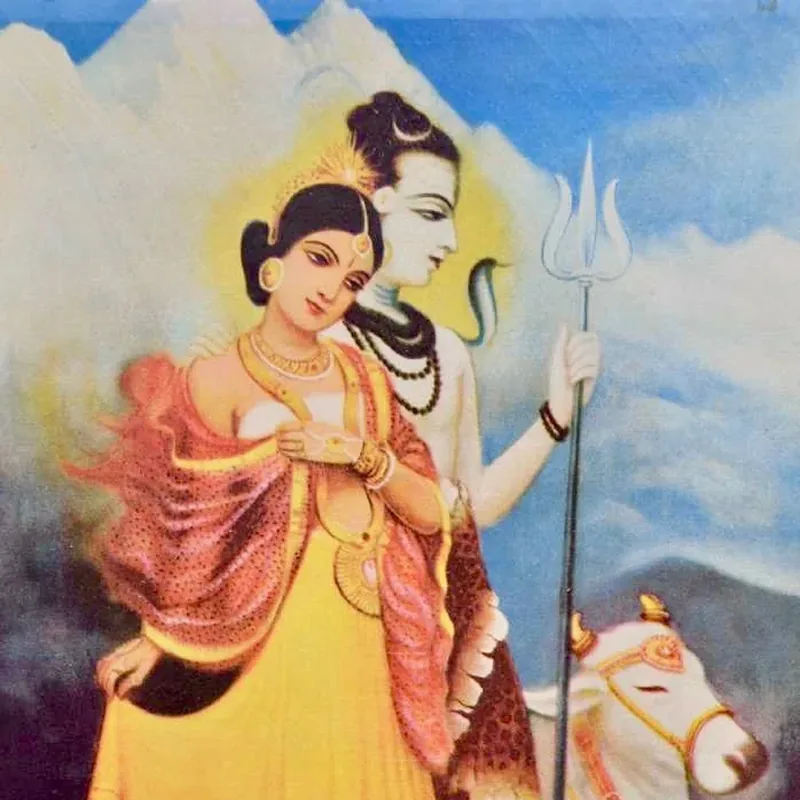
ShivaVedic
महामृत्युञ्जय मन्त्र
Mahamrityunjaya Mantra
By Rishi Markandeya (Rigveda 7.59.12) · संस्कृत
॥ ૐ નમઃ શિવાય ॥
Om Namah Shivaya
महामृत्युञ्जय मन्त्र
Mahamrityunjaya Mantra
By Rishi Markandeya (Rigveda 7.59.12)
संस्कृत · Vedic · Mantra
~1 min readShaiva tradition
A mantra to Tryambaka (three-eyed Shiva) from the Rigveda, also called the Rudra mantra. It asks to be freed from death as a ripe fruit falls effortlessly from its stem. Chanted for healing, protection and a steady mind in the face of mortality.
- Author
- Rishi Markandeya (Rigveda 7.59.12)
- Language
- संस्कृत
- Literary form
- Mantra
- Century
- Vedic
- Tradition
- Shaiva tradition
Voice Lab
Recite in My Voice
Record yourself reciting or singing this work once. Stored only on this device, never uploaded. The player will use your recording instead of the synthetic chant whenever you tap play.
ॐ त्र्यम्बकं यजामहे सुगन्धिं पुष्टिवर्धनम्। उर्वारुकमिव बन्धनान् मृत्योर्मुक्षीय माऽमृतात्॥
Meaning
Om — we worship the three-eyed Lord (Shiva), the fragrant one who nourishes all beings. As a ripe cucumber is freed from its stem, may we be freed from death — not from immortality.
Devotional companion
About
A mantra to Tryambaka (three-eyed Shiva) from the Rigveda, also called the Rudra mantra. It asks to be freed from death as a ripe fruit falls effortlessly from its stem. Chanted for healing, protection and a steady mind in the face of mortality.
Meaning
The great 'victory over death' mantra to Shiva — a Vedic prayer for healing and fearlessness.
In depth
Om — we worship the three-eyed Lord (Shiva), the fragrant one who nourishes all beings. As a ripe cucumber is freed from its stem, may we be freed from death — not from immortality.
History & context
Rigveda 7.59.12; chanted for healing, longevity, and protection.
Why people recite it
Chanted for recovery from illness, for the wellbeing of the unwell, for protection, and as a daily meditation that quietly dissolves the fear of death.
Life lessons
- A life lived fully ripens toward its end without dread. The mantra asks not to avoid death but to meet it unafraid — which is really a prayer about how to live.
Key themes
VedicMantraShivaHealing
You may also like
Stotraसंस्कृत
Shiva Tandava Stotram
Ravana (traditional) · Ancient
Ravana's thunderous Sanskrit hymn to Shiva — the cosmic dance set to roaring metre.
Read & recite →
Shlokaसंस्कृत
Karpur Gauram Karunavataram
Traditional (Shiva Dhyana) · Ancient
The camphor-white verse closing Shiva's aarti.
Read & recite →
Mantraसंस्कृत
Gayatri Mantra
Vishvamitra (Rigveda 3.62.10) · Vedic
Om — earth, atmosphere, heavens.
Read & recite →
Source & trust
Public domain
- Attribution
- Rishi Markandeya (Rigveda 7.59.12)
- Language
- संस्कृत · Vedic
- Source
- Public domain — Rigveda (ancient).
Devotional commentary and life lessons are editorial reflections. Historical details are limited to well-documented facts; devotional belief is labelled as tradition, never presented as proven history.